



How to Optimize Your Neurodevelopmental Profile

Imagine your brain is like a one-of-a-kind supercomputer. No two brains are built exactly the same. Some are great at spotting patterns quickly. Others shine at creative ideas, staying focused for a long time, or connecting with people. Learning how your own brain works can help you live a happier, more successful life.
Everyone Has a Unique Brain Profile
Neurodevelopment refers to the way your brain grows and gets organized over time. It shapes how you think, learn, pay attention, handle feelings, talk to others, sense the world, and build relationships.
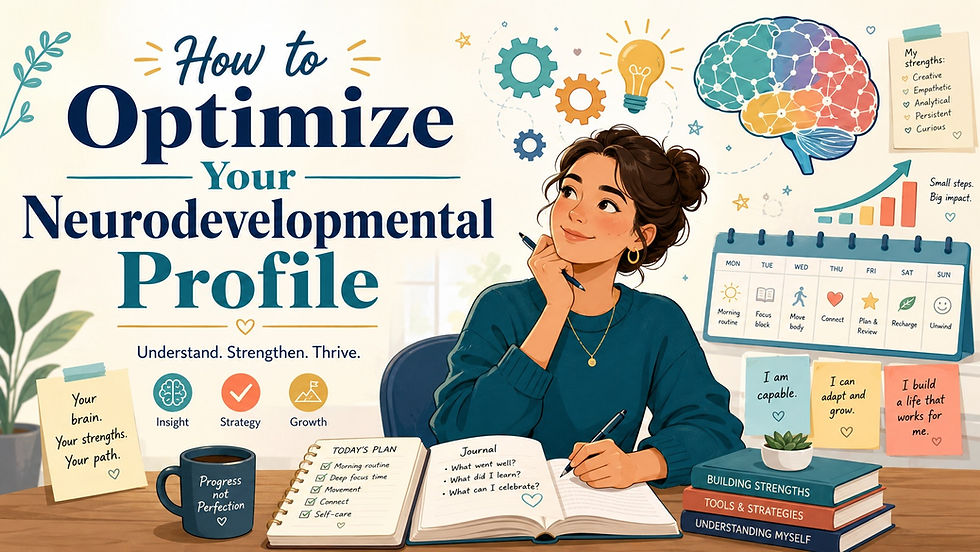
This creates your own special neurodevelopmental profile. It explains why you might be really good at some things—like solving tough problems or coming up with new ideas—but struggle with others, such as following spoken directions or staying organized. These differences are normal. They come from your genes, early life experiences, environment, and many other factors. They show your natural strengths and weaker areas, not flaws in who you are.
When you understand your profile, you can play to your strengths, get help where needed, and stop wasting energy fighting how your brain naturally works. Many people feel relief and new confidence once they see their brain this way. The no longer must blame themselves for characteristics or experiences that are beyond their control. Instead, they can focus and build upon what makes them excel.
Why Get a Professional Evaluation?
A comprehensive neurodevelopmental evaluation by an expert psychologist gives you a clear, detailed picture of how your brain works. It may include a diagnosis if one fits, but the biggest benefit is understanding yourself deeply. You learn exactly how you think, learn best, communicate, manage emotions, and connect with others. You learn to optimize your neurodevelopmental profile.
This knowledge helps in many parts of life:
School, studying, and lifelong learning
Friendships, family, and romantic relationships
Feeling good about yourself and building strong self-esteem
Choosing careers and daily routines that fit you
The better you understand why you succeed or get stuck, the easier it is to grow, ask for the right support, and shift negative thoughts into more helpful ones.
Practical Ways to Optimize Your Brain Profile
After you have an evaluation, there are many effective strategies you can try:
Get the Right Coaching or Support: Work with a success coach, educational specialist, or psychologist who truly understands brain development and support optimized living. They can teach you skills for planning, focusing, organizing, and handling stress. A regular talk therapist or mental health counselor may not have the right tools or training for this—specialized help might be a better fit.
Change Your Story: Replace self-critical explanations such as “lazy,” “careless,” or “not smart enough” with more accurate language describing the actual underlying challenge.
Change Your Environment: Small adjustments can make a big difference. Use noise-canceling headphones, organize your workspace to reduce clutter, set phone timers or visual schedules, adjust lighting, or create quiet zones. Match your daily schedule to your natural energy highs and lows.
Choose Better Learning and Work Paths: Look for classes, jobs, or projects that use your strengths. Someone who thinks best in pictures might love graphic design or engineering, while a person who enjoys talking might do well in teaching or sales. Many people feel much happier after switching to work that fits their thinking style, interests, and personality.
Prioritize Strengths and Goals: Identify the three to five most important evaluation findings and write them down. You might also translate each one into a specific daily action or intention.
Practice Mindfulness and Self-Regulation: Intentionally incorporate the most important findings from your neurodevelopmental evaluation into daily affirmations, journaling, and other reflective practices that keep this new understanding at the forefront of your mind. Revisiting them—especially when you wake up and before going to sleep—can help reinforce a more accurate, compassionate self-concept and keep your attention focused on your abilities, growth, and potential.
Build Healthy Daily Habits: Monitor fatigue, sensory overload, stress, and emotional regulation, since these can significantly affect cognitive performance. Consider adding exercise, medication, sleep, and nutrition.
Set Appropriate Goals: Focus on functioning and quality of life, not simply increased productivity. An executive function or success coach can help you set SMART goals to do this.
Use Tools and Strategies: Break big tasks into tiny steps, use apps for reminders and timers, try text-to-speech for reading, or color-coded notes for organization. Experiment with learning styles—visual diagrams, hands-on practice, writing, or talking things out.
Reflect and Track Progress: From time to time, review your journal about what environments, tasks, and routines bring out your best.
Build Relationships and Self-Advocacy: Consider sharing relevant results with trusted family members, employers, therapists, coaches, or educators so they can better understand how to support you. Maybe create a one-page summary. If you ask for accommodations, be sure they are appropriate and avoid framing them as special treatment; these are tools to improve your access and performance—they should not be demands upon others.
A Path to Understanding and Success
Neurodevelopment connects psychology, brain science, education, and personal growth. The goal is not to put a negative label on you or say something is wrong. Instead, it helps you know and accept yourself so you can make smarter choices and reach your full potential.
Understanding your unique brain wiring lets you stop fighting who you are and start working with your natural strengths. It often leads to better relationships, stronger confidence, and greater happiness. If you’re ready, a good evaluation can be one of the smartest and most positive steps you ever take toward becoming your best self.
Individual Matters specializes in comprehensive “whole person” evaluations in Grand Junction, Mesa County, and Colorado’s western slope. To learn more about our evaluations and how they may benefit you or your child, please contact our office.
©2026 Individual Matters. All rights reserved. Feel free to republish so long as credit is given. Individual Matters® is a registered trademark of Individual Matters, LLC.


Comments